
DRDO's failures over the decades have contributed significantly to India becoming the world's biggest weapons importer, points out Lieutenant General Prakash Katoch (retd).
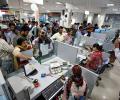
Amid slowdown blues, the government has unveiled a raft of measures over the past few months aimed at improving liquidity in the system, moderating interest rates as well as credit growth apart from addressing stress in the NBFC sector.

An executive director of a bank could, for example, be elevated to the post of chairman of a different bank.

Kumar said the Commission will follow the time-tested methods of consultations and consensus building in bringing about any reforms and will not shy away from tough decisions, according to an Election Commission (EC) statement.

Economic reforms seem to be on a slow train, while good old fiscal populism is alive and flourishing.

Moody's listed six agenda on the list of pending reforms -- land acquisition Bill, labour law reforms, significant infrastructure investment, tangible benefit from Make in India initiative, tax administration and PSU bank reforms
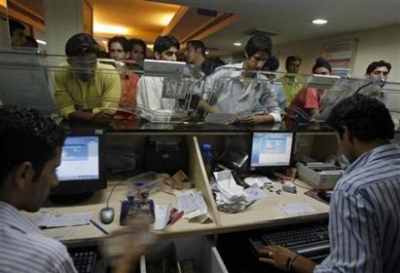
Quarterly results of many of these banks show significant losses.
Lack of decisiveness and courage to deal with PSBs may turn out be the biggest impediment to the Modi government's economic initiatives, says Debashis Basu.

PSUs will get direct allotment.

Two successive reports, one by Percy Mistry in 2007 and the other by Raghuram Rajan in 2008 had provided the RBI and the finance ministry with blueprints of what to do next. Both reports, unfortunately, was put on ice. The global meltdown saved the RBI. It also saved the finance ministry from having to work on the two reports.

What is required from government is intellectual framework.

RRBs were formed under an Act to provide credit to small farmers, agricultural labourers and businesses in rural areas.

At present, bank depositors get an insurance cover of Rs 1 lakh on their amount by the Deposit Insurance and credit Guarantee Corporation.
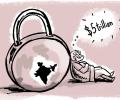
Chief Economic Advisor V Anantha Nageswaran on Thursday expressed hope that the economy will maintain the trend growth rate of 6.5 per cent and above for the rest of the years in the current decade. The economy will close the current fiscal logging in a growth of 6.5-7 per cent, he said, citing the projections of private sector analysts, Reserve Bank of India (RBI) and international agencies like OECD and the IMF. "This appears to be reasonable at this point in time although we will get the data on the fiscal second quarter in a few days, which will give more clarity on these numbers.

The Bharatiya Janata Party regime will have to make good on this election slogan to restore state-owned banks to health, says Rajiv Lall.

As deputy governor, Patel headed the RBI panel to draft the monetary policy report, which became the basis of the ongoing reforms at the apex bank

The interest money which is not claimed by people due to religious obligations is kept in suspended bank accounts.

'So you have welfare programmes, you reach out to the poor, you cut out the middlemen, you cut out the leakages and you try to raise the standard of living.'

The economic growth fell to a decade low of 5 per cent in 2012-13 fiscal.
.jpg)
At the retreat, PSBs had suggested the government cut its stake in these entities to less than 51 per cent over a period of time and empower the boards of individual banks.
Tuesday's policy announcement had a regulatory and development component.
The pricing and marketing freedom for exploitation would be capped by a ceiling price.
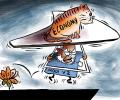
The reform priorities are clear: enhance savings, improve productivity. Just 25 basis points of moving interest rate up or down would not boost investment: Former RBI Governor Y V Reddy.
'If there is an RBI majority in the committee, there is no question of a veto.'

The first task before him is to get used to the idea of working with the Monetary Policy Committee

'We get to know secrets such as some of India's top-rated firms do not always make payments when due and many State-owned, listed, enterprises that borrow in bond markets default regularly.' 'Without naming the bank, he says that ever-greening of poor loans by a part of India's shadow banking lay at the doorstep of India's banking, notably 'one private bank'.' Viral Acharya's Quest for Restoring Financial Stability in India won't be music to many ears, observes Tamal Bandyopadhyay.

The eight-member committee under Sinha will also examine the factors affecting the timely and adequate availability of finance to the sector.

The government has deprived AAI of a sizeable and stable source of income.

The department of investment and public asset management (Dipam) can also seek in-principle approval from the Cabinet Committee on Economic Affairs (CCEA) for strategic divestment of PSUs on a case-to-case basis considering investor appetite and sectoral trends.

Pranab Mukherjee's stewardship of the economy will stand out as much for the manner in which he managed controversies as for creating quite a few of them, says A K Bhattacharya.
.jpg)
2014 made a lot of promises; can the new year deliver?

First, the Insolvency and Bankruptcy Code, much-lauded as a game changer, needs serious reform. Second, some vital policy choices would need to be made as far as competition law is concerned., says Somasekhar Sundaresan.
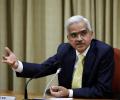
Reserve Bank Governor Shaktikanta Das on Wednesday said the country is at the doorstep of economic revival on the back of accommodative monetary and fiscal policies being pursued by the central bank and the government.
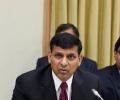
RBI data show one-fifth of all the infrastructure loans are stressed and the share of such loans in overall stressed assets is nearly a third.
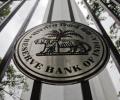
The Centre's proposal to call for governance reform in the RBI could, however, take a back seat, a source privy to the development said.

A greater payment security mechanism for power generation companies to ensure timely payouts for supply of electricity will be in focus in 2022 as stricter rules are on the anvil for 24x7 power supply amid discoms' outstanding dues at a whopping Rs 1.56 lakh crore. Mounting outstanding dues of distribution companies (discoms) to electricity generation companies (gencos) have been a perennial issue affecting the entire value chain in the power sector and are also a hindrance for the ambitious goal of 24x7 power supply across the country even when the payment for coal is made in advance. The situation persists despite the fact that discoms' dues become overdue after 45 days of generating bills and they also have to pay penal interest on the overdue amount in most of the cases to gencos.

Banks feel happy shifting their toxic assets from loan books to investment books while the ARCs enjoy the management fees with a smile, observes Tamal Bandyopadhyay.


The government has invited applications for the post of chief economic adviser (CEA) to replace K V Subramanian, who will complete his three-year tenure next month. Subramanian was appointed as CEA on December 7, 2018, while he assumed charge on December 24 in the same year. As per the public notice dated October 24, 2021 issued by Department of Economic Affairs, the Ministry of Finance, officer of central, state governments, RBI and public sector banks holding analogous post on regular basis in parent cadres or department are eligible to apply for the post.

Finance minister Nirmala Sitharaman on Wednesday exuded confidence that inflation would further decline and the government is on track to meet its budgetary target for deficit and said that there is no fear of stagflation in India. Replying to the debate on first batch of Supplementary Demands for Grants 2022-23 in Lok Sabha, the finance minister said inflation has come down and it is now in the tolerable band of the RBI. Inflation has been declining since April 2022 and it is declining further, she said.
 © 2026 Rediff.com - Advertise with us - Disclaimer - Privacy Policy - Sitemap - Feedback - About us - Terms of use - Grievances